
Social Perspective Taking


Free Webinar: Perspective Taking in the Classroom
Recognizing and Understanding Our Own & Others’ Thoughts, Feelings, and Behaviors
As we begin another school year, perspective taking is something our students are required to do every day, all day. Whether working in a group, reading a book, hanging out, or writing for others, understanding another’s point of view is embedded in every school’s curriculum. Perspective taking also helps us be consciously aware of each other and consider the thoughts, feelings, and intentions as we participate in and work our way through social situations.
Perspective taking is what helps us make sense of social situations—where we are, who is there with us, and what’s happening—even when we aren’t actively interacting with each other. Perspective taking helps us regulate our thoughts, feelings, and behaviors and adjust what we do and say to meet our own and others’ social goals—whether we’re playing a game, enjoying a family meal, learning in a group, or driving a car.
Quick Links
- Free Webinars
- Best-Selling & Award-Winning Products
- On Demand Courses
CEs available for select professionals - Free Stuff for Home & School
- What is Social Thinking?


Products to Support Social Perspective Taking Across Developmental Ages
Early Learners (4-7)
Elementary School (Ages 8-11)
Tweens, Teens & Young Adults

On Demand Courses—Practical Strategies You Can Use Right Now

Teaching the We Thinkers! Curriculum Series with Fidelity: A Short Course
This short 2-hour course is designed to give educators, therapists, and parents/caregivers an understanding of the We Thinkers! series, a metacognitive curriculum for 4- to 7-year-olds. It introduces social cognitive concepts; strategies for implementing the series with fidelity, including engineering the environment, pacing, and playing with the concepts; and highlights key components of social thinking, group formulation, and service delivery. Lessons are story-based, games oriented, and support inquiry-based learning using hands-on, multisensory teaching tools. The 90-day Recorded Replay Access begins at the time of Registration.
Download this free infographic on building social competencies for early learners.

2 hours of training and CE credit available for select professionals.

What’s Alexithymia?
What is alexithymia? It refers to challenges in developing awareness of one’s feelings, identifying, and distinguishing them from other physical sensations—and it’s gaining interest in the research, schools, and clinical arenas. Educators and parents have reported an increase in overall “regulation” challenges in the classroom, on the playground, and during small group activities. We’ll highlight select key aspects of emotional awareness and regulation and its role in perspective taking. Specifically, we’ll explore how alexithymia can impact the building blocks for spontaneous perspective taking across all contexts. We will suggest practical strategies to increase awareness of feelings within the perspective-taking process to use within the classroom, school, community, and home. The 90-day Recorded Replay Access begins at the time of Registration.
1.5 hours of CE credit available for select professionals.

Small Talk & Conversations
Small talk and conversations are dynamic, and we cannot create reliable scripts for how they will unfold. We can, however, increase our students' awareness of why we engage in social exchanges such as small talk. In this online course, we will unpack the complexities of small talk and conversation. We’ll break these down into their component parts to build strategies that support engagement in initial and ongoing social connection for children, teens, and adults. The 90-day Recorded Replay Access begins at the time of Registration.
3.5 hours of CE credit available for select professionals.

Free Stuff for Home & School
Free Video Lesson
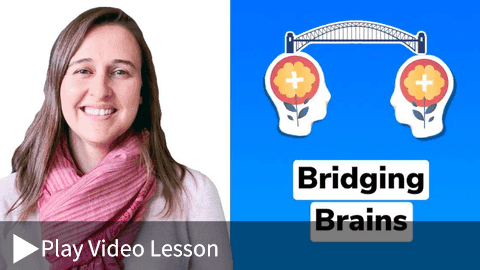
Allison King | MS, CCC-SLP Social Thinking San Jose, Clinical Director
Everyone has thoughts! How do we know what other people are thinking? How can we let other people know what we are thinking about? How do we get thoughts from one brain to another? The only way to do it is to bridge your brains!
Free Video Lesson
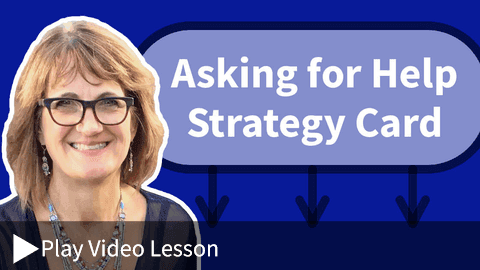
Did you know that asking for help requires self-awareness of one’s own perspective taking? All individuals need help at times, but needing help doesn’t mean you don’t know anything at all. We created a simple Asking for Help Strategy Card that breaks down the amount of help a student needs. This free video lesson & strategy card is part of our in-depth 60-minute free webinar: Perspective Taking in the Classroom.
Thinksheets
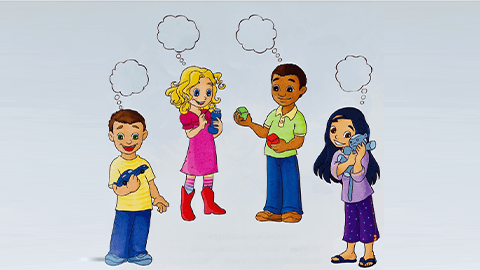
Thinking Thoughts and Feeling Feelings
Evan, Ellie, Jesse, and Molly are playing in their classroom. Thought bubbles go above their heads to show what they are thinking about. What are they thinking about?

Thinking with Your Eyes
Download these two pages to teach the concept of "Thinking with your eyes" in outer space. Remember: eyes are like arrows. They point to what we are looking at and thinking about.
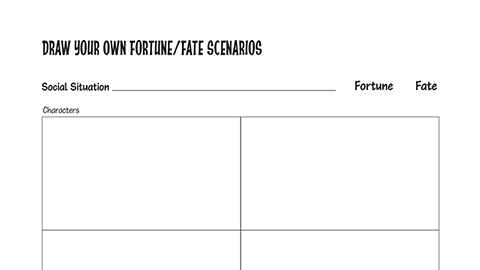
Draw Your Own Social Fortune/Fate Scenario
Download this thinksheet to map out social situations and visually analyze the relationship between actions and social outcomes. This resource supports concepts from the book Social Fortune or Social Fate.
What is Social Thinking?
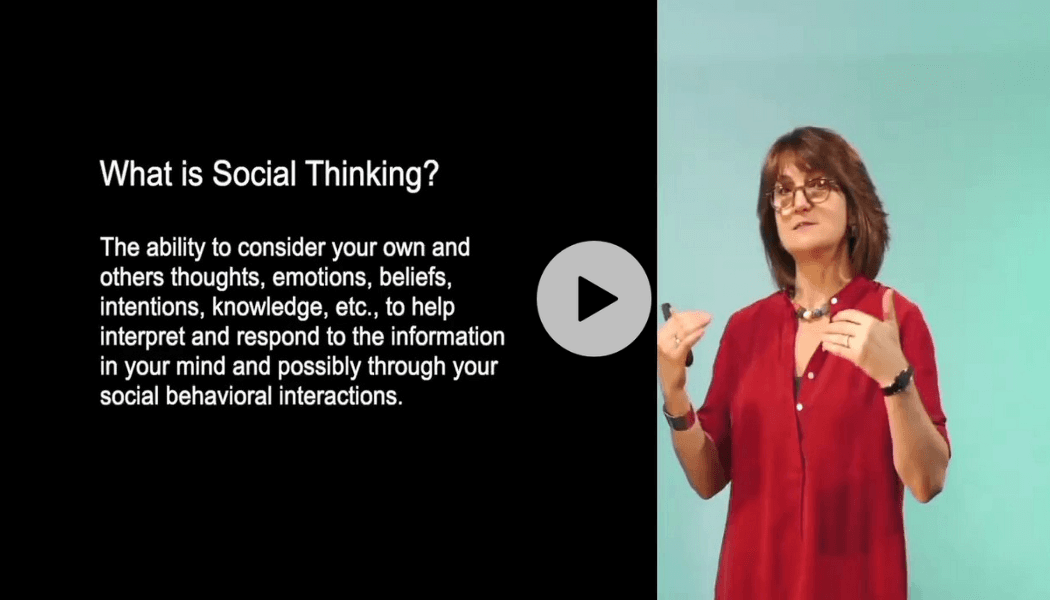
Develop Social Competencies
The Social Thinking Methodology provides evidence-based strategies to help people ages four throughout adulthood develop their social competencies, flexible thinking, and social problem solving to meet their own social goals and improve:
- Conversation & social connection
- Executive functioning
- Friendship & relationship development
- Perspective taking
- Self-regulation
- Social Thinking Vocabulary
- Social Problem Solving
